Safe sleep, plainly
Five rules, the reason behind each, and an honest word about what to do when you're past exhaustion.
This content is for general educational purposes only and is not medical advice. Individual needs vary. Please consult an appropriately qualified healthcare professional regarding your individual health needs. Medical & Wellness Disclaimer.
In this piece
This is short on purpose, and it is the one page here I would want every new mother to have read before she is too tired to read anything.
On the back, every sleep
For naps and for nights, until their first birthday. Back sleeping is the single most effective thing on this list.
Once a baby can roll both ways on their own, you do not have to keep turning them back over. You still start them on their back.
A firm, flat surface
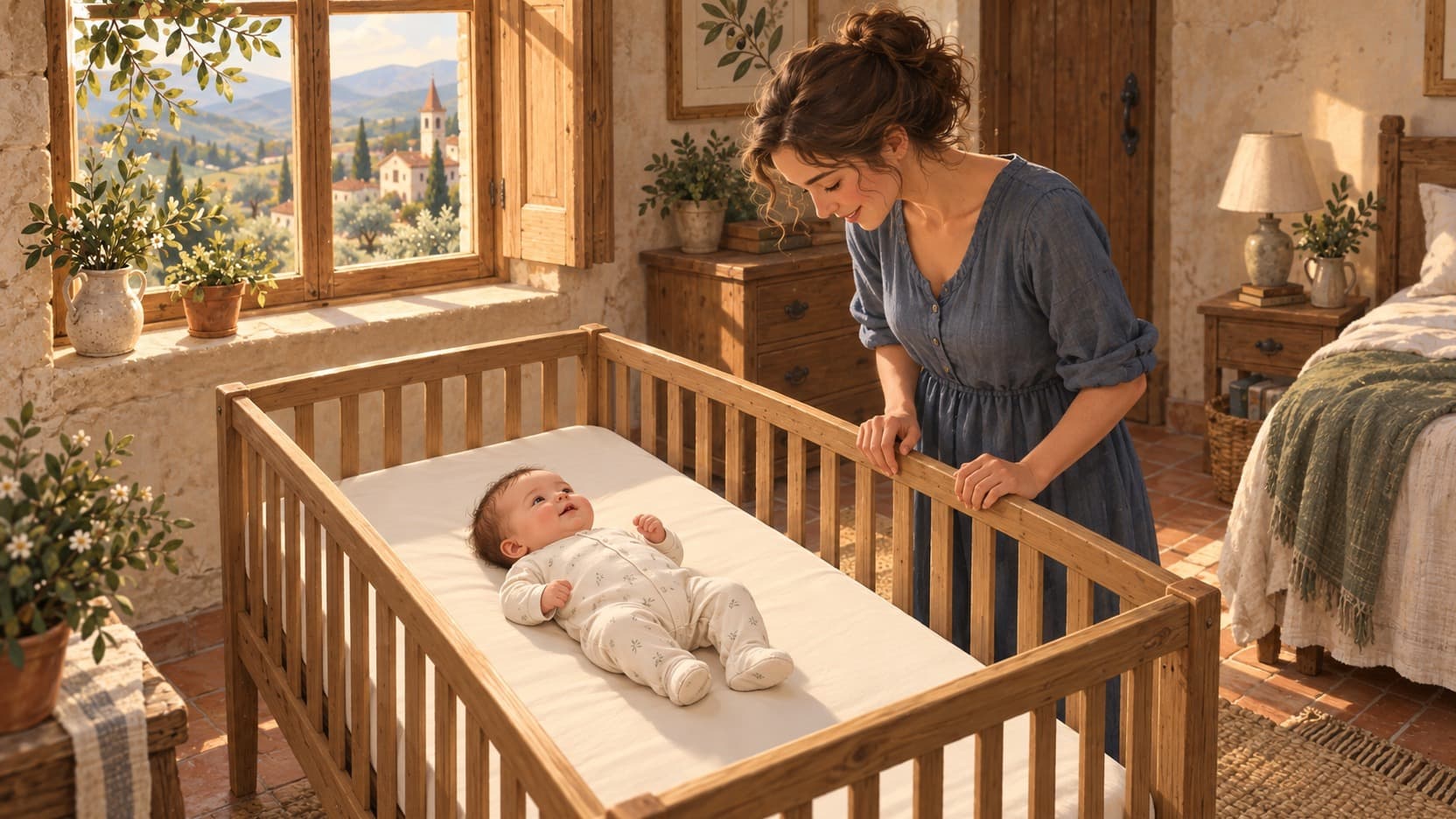
A crib, bassinet or play yard meeting safety standards, with a firm mattress that fits tightly and a fitted sheet — and nothing else.
Not a car seat, swing, bouncer or nursing pillow for sleep. A baby who falls asleep in one should be moved. Inclined and soft surfaces are where airways get blocked.
Your room, not your bed
Room sharing without bed sharing is recommended for at least the first six months, and it is associated with substantially lower risk — up to about half.
Keep them close. Keep them on their own surface.
Room sharing is the recommendation that makes night feeds easier rather than harder. It is not the strict option — it is the practical one.
Nothing in with them
- No pillows, no quilts, no loose blankets
- No bumper pads, of any kind, including the mesh ones
- No stuffed toys, however small
- Use a sleep sack or wearable blanket instead of bedding if they need warmth
Not too warm
Overheating raises risk. Dress them in roughly one more layer than you would be comfortable in, and check the back of the neck rather than hands or feet, which run cool in babies regardless.
The honest part about the middle of the night
Almost every mother has fallen asleep feeding at some point, and being told simply not to does not help anyone.
If there is any chance of dozing off, feed in a bed cleared of pillows and duvets rather than on a sofa or armchair. Falling asleep with a baby on a sofa or recliner carries a far higher risk than anywhere else, and that is the specific thing most worth avoiding.
Telling your provider honestly how nights are actually going gets you better advice than the version where everything went to plan.
The rest of the list
Breastfeeding, offering a pacifier at sleep times, keeping the air smoke-free, and keeping up with routine care and vaccinations are all associated with lower risk.
You do not have to do all of it perfectly. Each one helps on its own.
Sources, review & topics
Sources & review
This piece has not been reviewed by a qualified healthcare professional. We label content expert-reviewed only when one has genuinely participated.