The school-age years nobody warns you about
Everyone warns you about babies and teenagers. The years in between get described as the easy bit, and they aren't.
In this piece
The physical work drops away and everyone congratulates you on getting through the hard part. Then you discover that the hard part has changed shape rather than ended.
The problems stop being yours to solve
A baby's difficulties are almost all solvable by you. A nine-year-old comes home with things you cannot fix — a friend who went cold, a teacher who was unfair, a group that didn't include them.
You can sit with it. You cannot resolve it. That is a genuinely difficult adjustment and nobody warns you about it.
They start seeing you clearly
Somewhere around eight or nine, a child works out that you are a person — with moods, limits, and opinions that other adults don't share.
It is disconcerting to be assessed by someone you made. It is also exactly what should happen, and it is the beginning of them having their own judgment.
The goal was never a child who thinks you are perfect. It was a child who can tell what you actually are and still trust you.
What they need most at this age
- To be believed first, before anything is investigated
- Enough unstructured time to be bored in
- One thing they are allowed to be visibly bad at without commentary
- Responsibility that is real — a job that would actually not get done without them
- You, available and not obviously busy, at the unpredictable moment they want to talk
The talking window moves
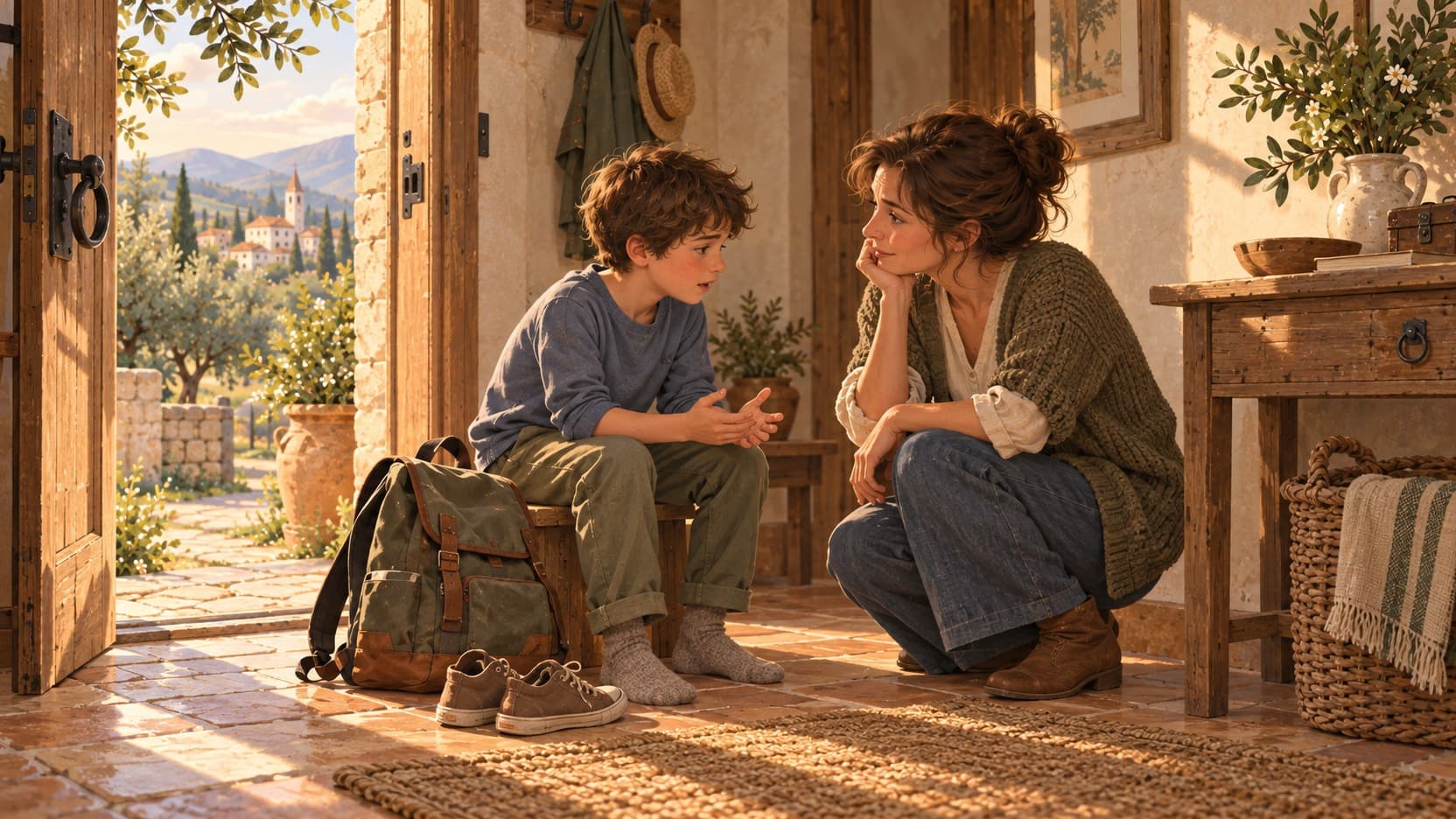
Small children talk constantly and mostly about nothing. School-age children talk rarely and occasionally about everything, usually at bedtime, usually when you are tired and trying to leave the room.
Stay the extra four minutes. That is where this age keeps its real conversation, and the window closes fast if it is repeatedly missed.
Resisting the schedule
There is enormous pressure to fill these years — the clubs, the teams, the improvement. Some of it is wonderful and some of it is a treadmill you accidentally got on.
A child who has never been bored has not learned to entertain themselves, and a family with no unclaimed evenings has nowhere for an unexpected conversation to happen.
The quiet grief
Nobody mentions that this stretch has losses in it. The last time they held your hand crossing the road. The end of being the person who knows everything.
You are allowed to find that sad while also being glad it is happening. Both are true, and saying so out loud to another mother helps more than you would expect.