Visual guide
D-MER visual guide
1 of 10

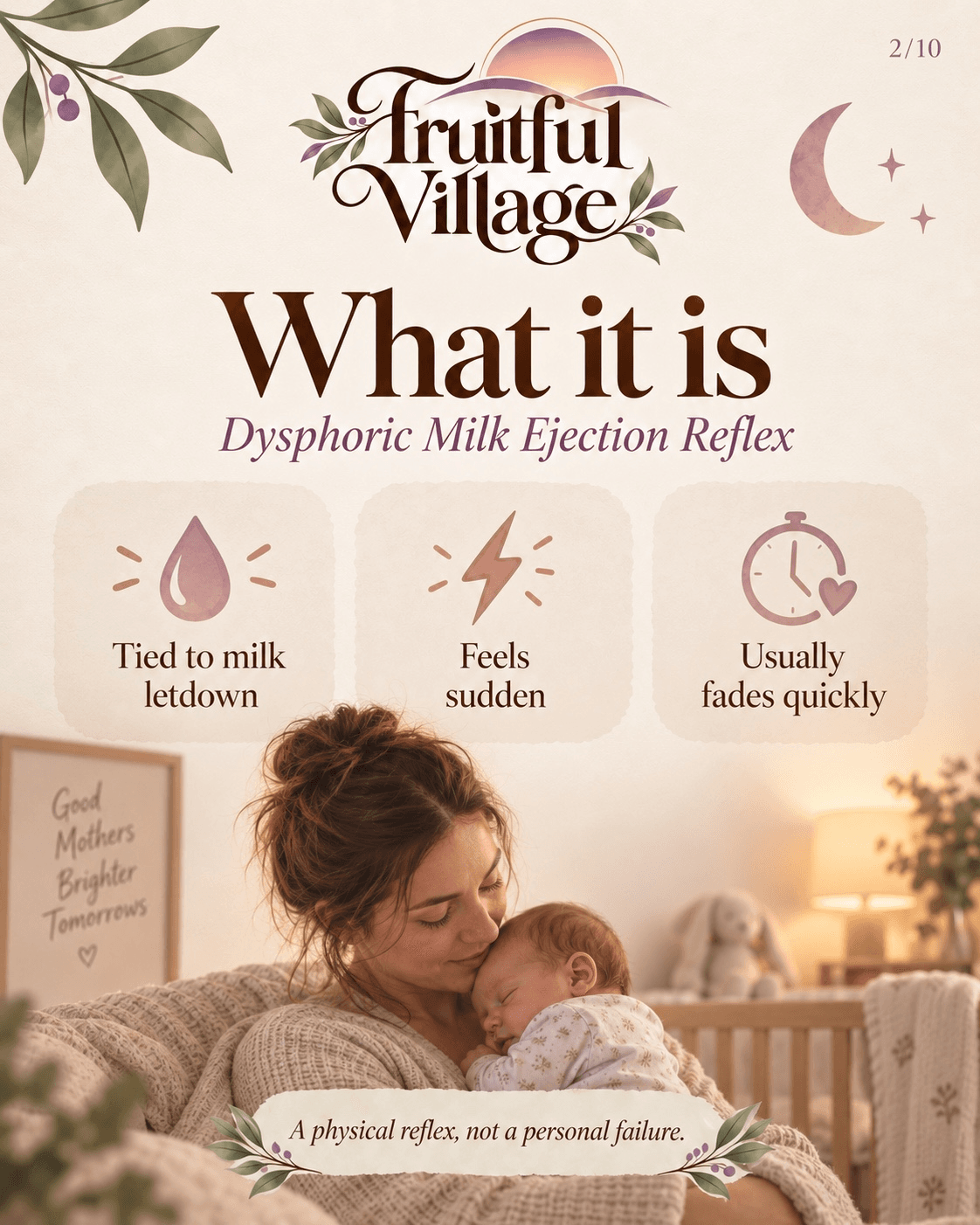




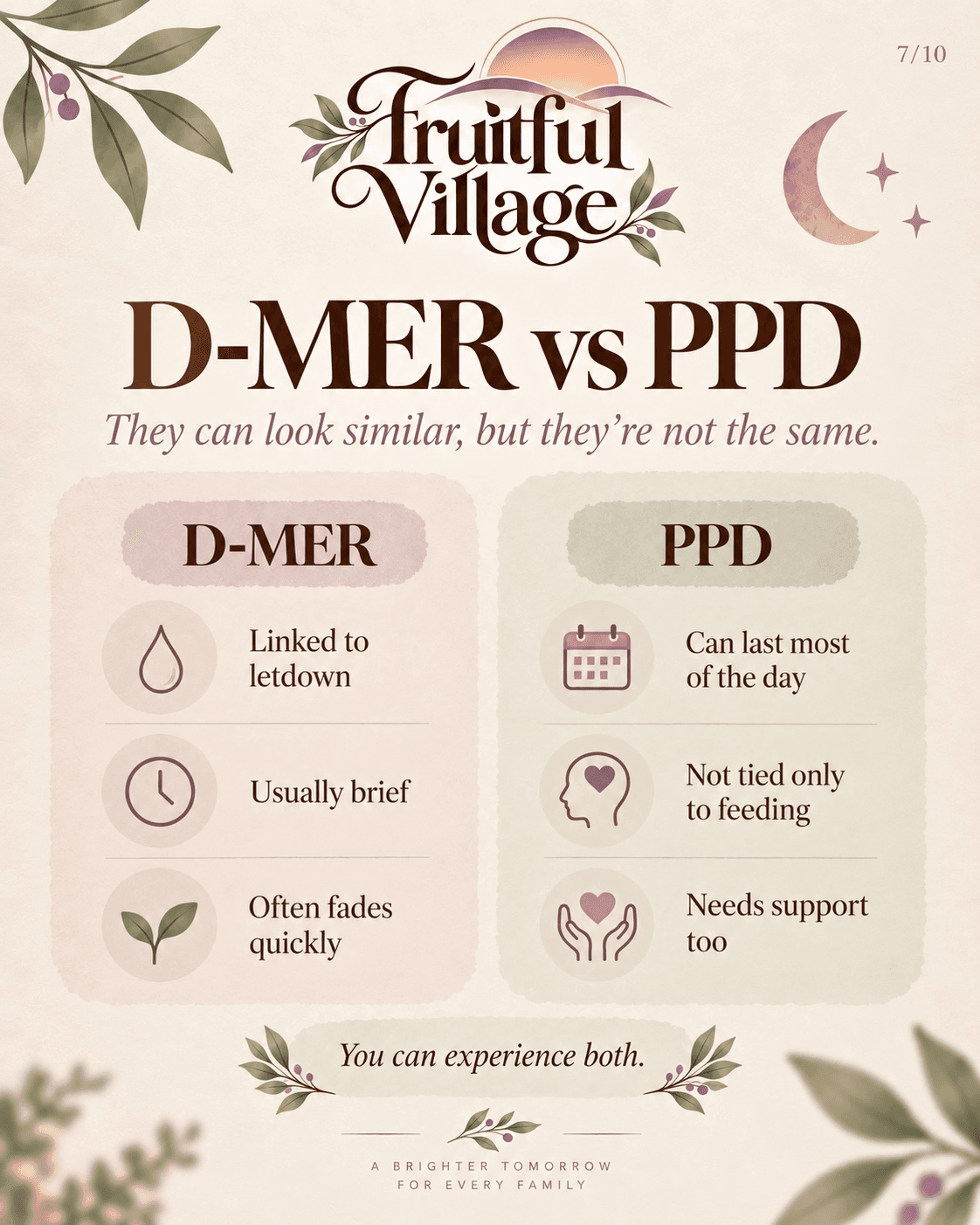



These slides offer a brief overview. The sourced article below includes newer prevalence estimates, what researchers still do not know, and why D-MER and postpartum depression can occur together.
D-MER: when sadness arrives with letdown
If sadness, dread, anxiety, or irritability arrives suddenly with milk letdown and then lifts, there is a name for that pattern — and it is not a personal failure.
This content is for general educational purposes only and is not medical advice. Individual needs vary. Please consult an appropriately qualified healthcare professional regarding your individual health needs. Medical & Wellness Disclaimer.
In this piece
Some mothers describe it as a trapdoor: one moment they feel ordinary, and as milk begins to release they are hit by sadness, dread, anxiety, irritability, homesickness, or a hollow feeling. Then, often within a few minutes, it lifts.
That timing is the clue. Dysphoric milk ejection reflex — usually shortened to D-MER — is the name used for a brief wave of negative emotion that arrives just before or during milk letdown. It can happen while nursing, pumping, or with a spontaneous letdown.
D-MER does not mean you do not love your baby, that you are ungrateful, or that you are failing at breastfeeding. The feeling is real, even when it passes quickly.
The pattern matters more than the exact feeling
D-MER does not feel identical for everyone. Published studies describe sadness, anxiety, tension, irritability, panic, agitation, loneliness, frustration, and feeling overwhelmed. What the experiences share is their close link to milk release and their abrupt, usually brief course.
A simple note on your phone can help: when the feeling began, whether milk letdown was happening, how long it lasted, and whether the same feeling appeared at other times. That pattern gives an obstetric clinician, primary-care clinician, midwife, or lactation consultant much more to work with than the phrase ‘I feel bad when I feed.’
What researchers know — and what they do not
D-MER is being studied, but the evidence is still limited. Different studies have reported very different estimates because researchers have used different definitions, questionnaires, settings, and time points. One 2019 chart review found 9.1%; later studies have reported estimates from about 6% to 27%. There is not yet one settled prevalence number.
A rapid dopamine change around milk ejection is one proposed explanation. It is biologically plausible, but it has not been confirmed as the cause. Fruitful Village will not turn that theory into a diagnosis, supplement plan, or promise of a cure.
D-MER and postpartum depression are not the same thing
D-MER is closely timed to milk letdown and is usually brief. Postpartum depression or anxiety can affect much more of the day and is not limited to feeding. But this is not an either-or test: a mother can experience both, and recent research has found higher depression-screening scores among some participants with likely D-MER.
If sadness, anxiety, hopelessness, rage, numbness, or fear continues beyond letdown; appears elsewhere in the day; is worsening; or makes it hard to function, please tell a health professional. You do not need to decide which label fits before asking for help.
What may make the next feed gentler
There is no well-established treatment protocol yet. Naming the pattern can reduce fear. Some mothers find that slow breathing before letdown, water and a snack nearby, dimmer light, calming sound, skin-to-skin contact, or a trusted person present makes the moment easier to ride through. These are comfort measures, not cures, and no one should be blamed if they do not help.
Stress and lack of sleep were commonly reported as worsening factors in a 2025 survey, while partner support and sleep were among the factors most often reported as helpful. A lactation consultant can also help you look at feeding pain, oversupply, pumping, or other problems that may be adding strain.
Do not start or stop a medicine, herb, or supplement to change dopamine or milk supply based on an online explanation. Discuss treatment decisions with a clinician who knows that you are postpartum and breastfeeding.
When to reach out
Start with your obstetric clinician, primary-care clinician, midwife, or a qualified lactation consultant. If you are thinking about harming yourself or your baby, feel detached from reality, or do not feel safe, call 911 or 988 in the United States or go to the nearest emergency department now. If you are elsewhere, use your local emergency number.
- The feeling lasts well beyond letdown or happens outside feeding too
- Episodes are becoming more intense or frequent
- You dread every feed, are considering weaning because of the feeling, or are struggling to cope
- You have persistent sadness, anxiety, hopelessness, rage, numbness, or trouble functioning
- You want help deciding whether this pattern is D-MER, a postpartum mood condition, or both
You do not have to prove that it is severe enough before you ask someone to stand beside you.
Questions women ask
How long does D-MER usually last?
The defining pattern is brief and tied to milk letdown. Studies commonly describe symptoms lasting seconds to a few minutes. Feelings that persist much longer or occur away from feeding still deserve attention, because D-MER and postpartum mental-health conditions can coexist.
Is D-MER the same as postpartum depression?
No. D-MER is closely linked to milk ejection and usually passes quickly; postpartum depression affects mood and functioning more broadly. They can occur together, so timing alone should not be used to dismiss ongoing symptoms.
Does D-MER mean I should stop breastfeeding?
Not automatically. Some mothers continue with added support, and others decide that changing or ending feeding is healthiest for them. A lactation professional and health clinician can help you weigh your symptoms, feeding goals, and mental health without shame.
Can D-MER happen while pumping?
Yes. D-MER can accompany nursing, pumping, or spontaneous letdown. Some people report a different intensity with pumping, but experiences vary.
Sources, review & topics
Sources & review
- Ureño et al. — Dysphoric Milk Ejection Reflex: A Descriptive Study (2019)
- Deif et al. — D-MER characteristics, risk factors, depression scores, and breastfeeding self-efficacy (2024)
- Solmonovich et al. — Incidence and awareness of D-MER (2025)
- Cappenberg et al. — D-MER prevalence, persistence, and implications (2025)
- American College of Obstetricians and Gynecologists — Postpartum Depression
This piece has not been reviewed by a qualified healthcare professional. We label content expert-reviewed only when one has genuinely participated.