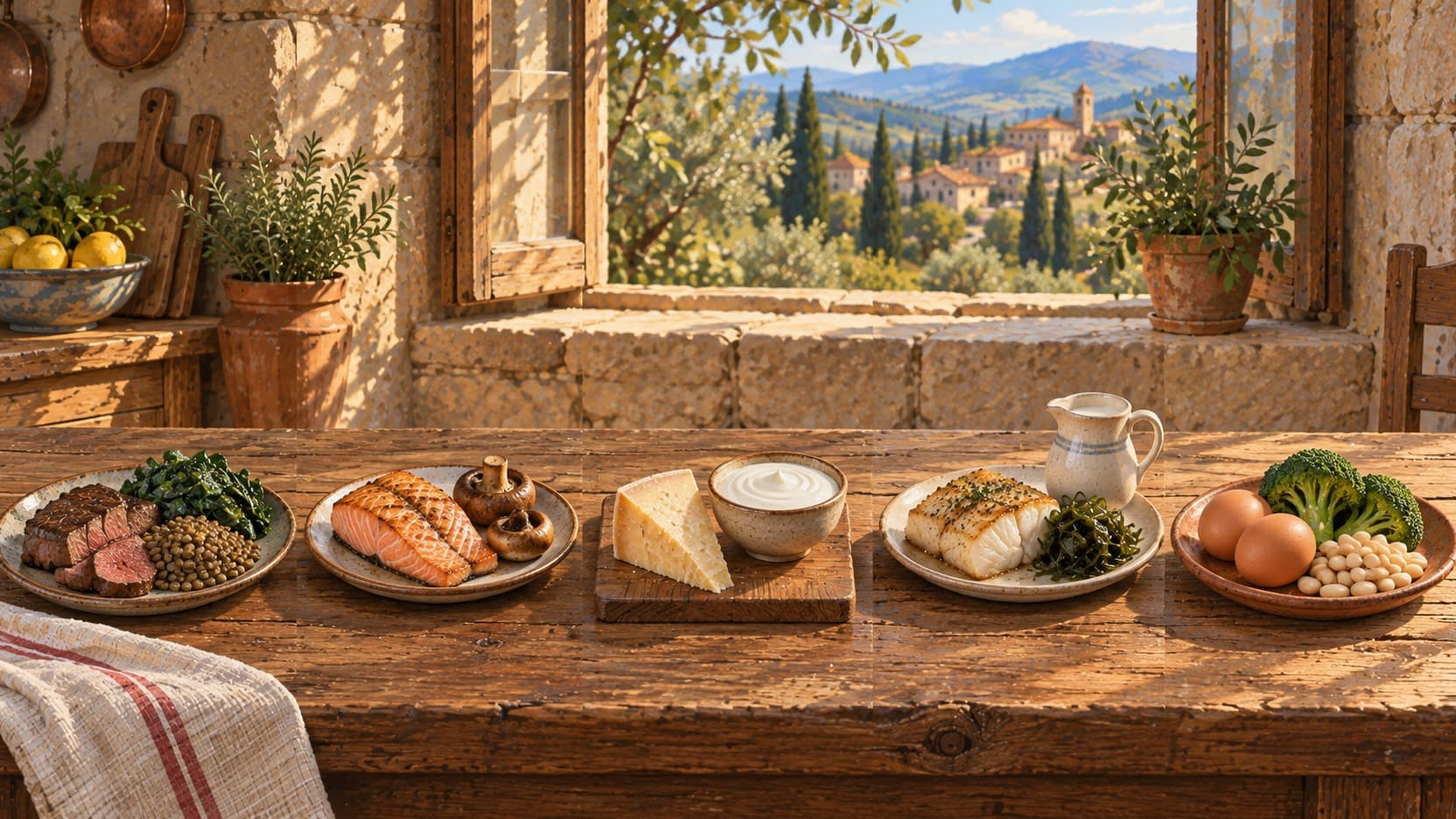
Five nutrients most moms are quietly low on
Food first, no protocol, and nothing you need to buy from us. Just the ones that come up again and again.
This content is for general educational purposes only and is not medical advice. Individual needs vary. Please consult an appropriately qualified healthcare professional regarding your individual health needs. Medical & Wellness Disclaimer.
This is not a supplement pitch. Most of what follows is food, and the one rule worth keeping is at the bottom: ask before you start, especially if you are pregnant, feeding a baby, or taking anything prescribed.
Iron
The one that comes up most. Iron-deficiency anemia affects roughly 9% of American women aged 20 to 49, and rates in pregnancy are higher still. Heavy periods raise the risk considerably, and so does having had babies close together.
It is worth naming the symptoms because they get attributed to motherhood instead: exhaustion that sleep doesn't fix, breathlessness on the stairs, cold hands, a racing heart, hair falling out, and sometimes a strange urge to chew ice.
- Red meat, liver, and dark poultry meat are the most readily absorbed forms
- Lentils, beans, tofu, pumpkin seeds and dark leafy greens are the plant forms — pair them with something high in vitamin C to absorb more
- Tea and coffee with a meal reduce absorption; move them to between meals
Iron is the one to test rather than guess at. Too much is genuinely harmful, so a blood test before supplementing is worth the appointment.
Vitamin D
Made in skin from sunlight, which makes it a predictable shortfall for anyone through a northern winter, anyone mostly indoors, and anyone with darker skin, who needs considerably more sun exposure to make the same amount.
Food sources are limited — oily fish, egg yolks, and fortified foods — which is why this is one of the few where a supplement is commonly recommended rather than a fallback. Your provider can test and tell you a dose rather than you guessing at one.
B12
Only found in animal foods, so anyone eating little or no meat, dairy or eggs is at real risk, and so is anyone on long-term acid-reducing medication, which affects absorption.
Deficiency looks like fatigue and brain fog, which is to say it looks like every mother of a small child, which is exactly why it gets missed. It is easy to test.
Iodine
Needed for thyroid hormone, and requirements rise in pregnancy and while breastfeeding. Intake has drifted down as people moved from iodized table salt to sea salt and kosher salt, which mostly are not iodized.
Dairy, eggs, fish and iodized salt are the usual sources. Seaweed is a source too, but a wildly variable one — some contains far more than a daily requirement in a single portion, so it is not a reliable way to aim.
Choline
The least talked about of the five, and one most people have never heard of. It matters for the baby's brain development in pregnancy and while feeding, and surveys suggest most women fall short of the recommended intake.
Egg yolks are the standout source — two eggs gets you a meaningful way there. Liver is higher still, then meat, fish, beans and cruciferous vegetables. Notably, many prenatal vitamins contain little or none, so it is worth checking the label of the one you're taking.
The rule underneath all of it
Food first, because food brings everything else along with it and is very hard to overdo.
And then: ask before you start. Not because supplements are sinister, but because iron can be harmful in excess, some things interact with prescriptions, and a blood test costs less than a year of guessing. Take the bottle to the appointment if it's easier than explaining.
Sources, review & topics
Sources & review
- NIH Office of Dietary Supplements — Iron fact sheet
- NIH Office of Dietary Supplements — Vitamin D fact sheet
- NIH Office of Dietary Supplements — Choline fact sheet
This piece has not been reviewed by a qualified healthcare professional. We label content expert-reviewed only when one has genuinely participated.