The Village Guide to Pregnancy Comfort
By the third trimester your body is carrying a load it was never asked to carry before.
Affiliate Disclosure: This page contains affiliate links. If you purchase through one of these links, Fruitful Village may earn a commission at no additional cost to you. Our opinions and recommendations remain our own. Read the full disclosure. As an Amazon Associate I earn from qualifying purchases.
This content is for general educational purposes only and is not medical advice. Individual needs vary. Please consult an appropriately qualified healthcare professional regarding your individual health needs. Medical & Wellness Disclaimer.
Who this guide is for
Women in the second and third trimester dealing with lower back, hip or pelvic discomfort.
How we chose
- We listed the free positional changes first, because they help a great many women and cost nothing.
- We favored items that ease load rather than claiming to treat a condition.
- We flagged where a professional — particularly a pelvic floor physiotherapist — would outperform any product.
- Everything here is framed as something to raise with your own midwife or OB.
What we considered
- Whether it addresses load or just masks discomfort
- Adjustability across a changing body
- Comfort in real daily wear
- Safety in pregnancy and the need for provider clearance
Our picks
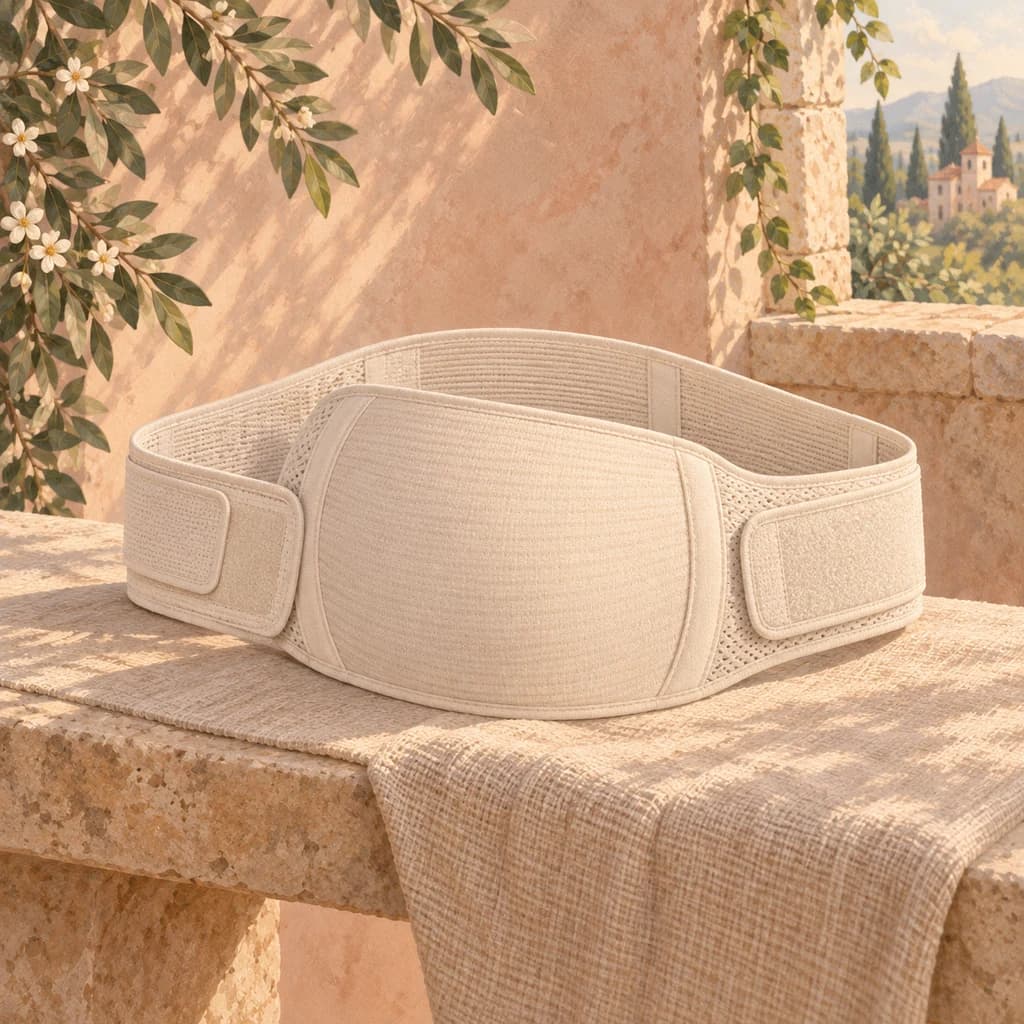
Maternity Belly Support Band
Adjustable through growth · Amazon
Why we picked it
It lifts some weight off the lower back and pelvis, and the difference tends to be immediate. Standing at the stove becomes possible again.
Who it may suit
Second and third trimester, worn for a few hours at a time rather than all day.
Good to know
- Intended for a few hours at a time rather than all day
- It eases a symptom — a pelvic floor physiotherapist addresses the cause
- Sizing runs inconsistently; read the chart rather than the label

Magnesium Lotion
Topical, cream base · Thrive Market
Why we picked it
Topical, so it avoids an already-queasy stomach, and the lotion doesn't sting the way the spray does — which decides whether anyone keeps using it.
Who it may suit
Adults whose provider has said magnesium is appropriate for them.
Good to know
- Absorption through skin is less studied than oral forms
- Ask your midwife or OB before using anything topical in pregnancy

Red Raspberry Leaf Tea
Organic, single ingredient · Thrive Market
Why we picked it
A long tradition of use in late pregnancy and a warm evening ritual. The research is currently limited and mixed, and we'd rather say so.
Who it may suit
Late pregnancy, if your midwife or OB has said it's appropriate.
Good to know
- Evidence is currently limited and inconsistent
- Not for the first trimester — ask your provider when, and whether, to begin
The free things to try first
A pillow between your knees at night, keeping the pelvis stacked rather than twisting.
Stop standing with your weight on one hip. We all do it while holding a toddler, and it grinds the joint that already hurts.
A few minutes on hands and knees daily, taking the weight off your back entirely.
Sit on your sit bones, not your tailbone. Slumping is the most common cause of the ache that starts at 4pm.
When it's worth seeing someone
A pelvic floor physical therapist is the most under-used professional in pregnancy care. If pubic bone pain makes rolling over in bed feel impossible, that's worth a referral.
A support band eases the symptom. These people address the reason.
Please don't wait on these
Call your midwife or OB straight away for severe or one-sided pain, pain with fever or bleeding, regular tightening before 37 weeks, sudden swelling in the face or hands, or a bad headache with vision changes.
You will never be a bother.
Questions women ask
Do maternity support belts actually help?
Many women report meaningful relief from lower back and pelvic pressure while wearing one, particularly in the third trimester. They're intended for a few hours at a time and ease symptoms rather than treating an underlying cause.
How can I relieve pelvic pain during pregnancy?
A pillow between the knees at night, avoiding standing on one hip, hands-and-knees positions, a support band, and a referral to a pelvic floor physical therapist — the most effective and most overlooked option.
Sources & review
This piece has not been reviewed by a qualified healthcare professional. We label content expert-reviewed only when one has genuinely participated.